
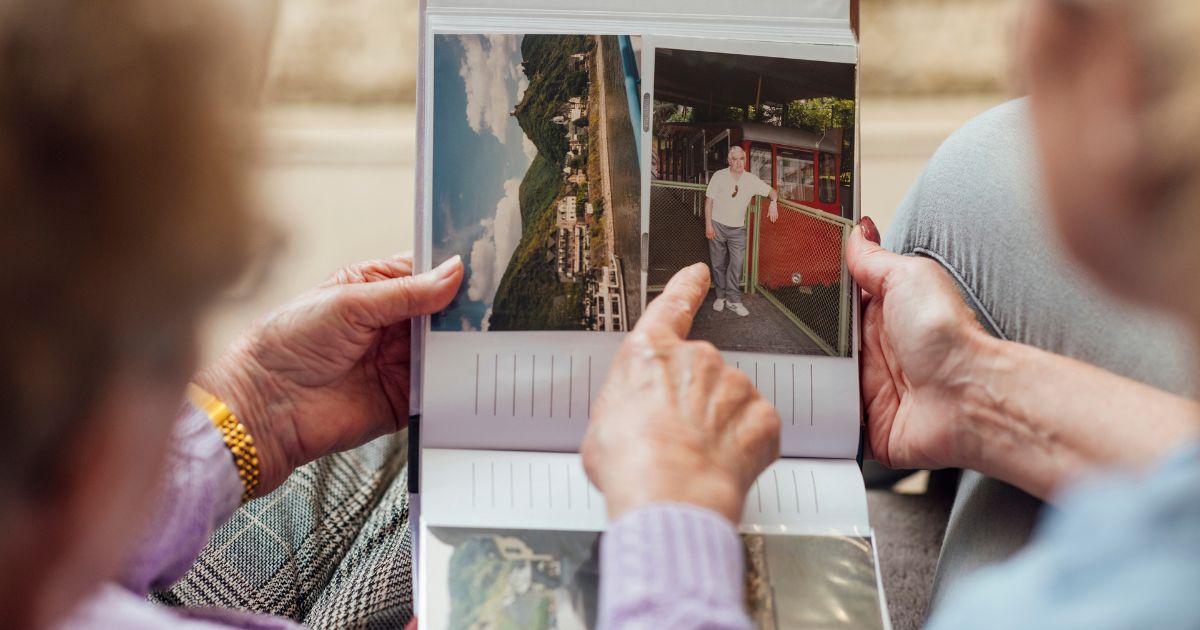
A dementia diagnosis can tell you something important about the support a person may need, but it cannot tell you who that person is.
It cannot tell you that Robert spent 35 years teaching high school history and still enjoys helping others. It cannot tell you that Margaret has been called Peggy since childhood and rarely answers to her formal name. It cannot tell you that Sunday mornings always meant church, that coffee was taken black, or that the garden was the first place someone headed after dinner.
Learning a person’s history, preferences, routines, relationships and strengths gives caregivers something a diagnosis alone cannot provide: context. And that context can help transform everyday care into something much more personal.
Key Takeaways: The Importance of Life Stories in Memory Care
- Life stories can give dementia caregivers practical insight into a resident’s routines, preferences, strengths, and ways of connecting.
- Familiar roles and interests can inspire meaningful opportunities to participate and contribute.
- Music, traditions and daily rhythms offer connection without requiring someone to recall a specific memory.
Table of Contents
A Life Story Is More Than a Biography
A Preferred Name Can Tell Its Own Story
Familiarity Does Not Require a Memory Test
Past Roles Can Point to Present Strengths
Memory Care Should Make Room for the Whole Person
A Life Story Is More Than a Biography
When families hear “life story,” they may picture a collection of photographs, favorite songs, hometowns and important dates. Those things can be meaningful. But in specialized Memory Care, knowing someone’s story can serve another purpose.
It can help answer questions such as:
- What makes this person feel comfortable?
- What gives them a sense of purpose?
- How do they prefer to be approached?
- What routines feel natural to them?
- What strengths can we continue to encourage?
The goal is to understand what has mattered throughout their life so those things can continue to have a place in the present.
A Preferred Name Can Tell Its Own Story
Using a resident’s preferred name is more than courtesy. It communicates something important:
I know who you are.
At Arden Courts, that kind of personal connection reflects our Circle of Care commitment to being Helpful, Caring and Responsive. Care begins with respect, and respect often shows itself through the smallest interactions: introducing yourself, using the name a resident prefers and taking time to understand how that person likes to communicate.
Small moments can create a powerful sense of belonging.
Familiarity Does Not Require a Memory Test
There is an important difference between offering something familiar and expecting someone to remember it.
Imagine putting on a song a resident loved for decades. The purpose does not have to be asking, “Do you remember this song?” or “Who did you dance to this with?”
Instead, the music itself can be the experience. A resident might hum, tap a foot, or sing a part of the chorus. They may just smile or sit quietly and listen.
That moment has value even if no specific memory is named. The same can be true of familiar routines, foods, prayers, hobbies, gestures, and traditions. For someone living with dementia, connection does not need to depend on proving what they remember.
This is one reason music and dementia can be such a meaningful pairing. Music can create an opportunity for expression, participation and togetherness without turning the moment into a quiz.
Past Roles Can Point to Present Strengths
One of the most valuable things a life story can reveal is not simply what someone once did, but what qualities they brought to it.
- A teacher may still be encouraging.
- A parent who managed a busy household may still like helping.
- A business owner may still enjoy conversation and meeting new people.
- An artist may still respond to color, texture, and creativity.
- A lifelong jokester may still have impeccable timing.
These are not just memories. They are parts of a person’s character.
At Arden Courts, meaningful engagement is built around what residents can do and enjoy. Familiar activities and routines can provide opportunities for residents to participate, make choices, and contribute in ways that feel comfortable to them.
Memory Care Should Make Room for the Whole Person
Dementia can change memory, communication, and the way a person experiences the world. It does not reduce a lifetime to a diagnosis.
There are still preferences to respect. Strengths to notice. Relationships to nurture. Choices to offer. Humor to enjoy. Music to share. Familiar rhythms to honor. And new moments to discover.
At Arden Courts, Memory Care Is All We Do. Our purpose-built communities are designed specifically for people living with Alzheimer’s disease and related dementias, with an approach that considers not only what support each resident needs, but who that resident is.
Because when caregivers understand the person, even an ordinary interaction can become more meaningful.
- A preferred name.
- A familiar song.
- A garden visit.
- A towel folded together.
- A conversation that begins with genuine curiosity.
Those moments may be small. But relationships are built one moment at a time.
Want to understand what specialized Memory Care can look like for someone you love? Explore Our Purpose-Built Memory Care Guide to learn how thoughtful design, daily routines, meaningful engagement and personalized support work together at Arden Courts.